At Doherty Roofing, we follow the professional three-stage roof cleaning process that delivers safe, thorough and long-lasting results on all roof types:
Stage 1 — Roof Inspection Before any cleaning work begins, Jim inspects your roof thoroughly to assess the extent and type of organic growth present, identify any areas of existing damage that should be noted before cleaning commences, and confirm that the roof covering is in a suitable condition to be cleaned. This inspection also informs the specification of the biocide treatment to be used, ensuring the right product is applied at the correct concentration for your specific roof type and the level of growth present.
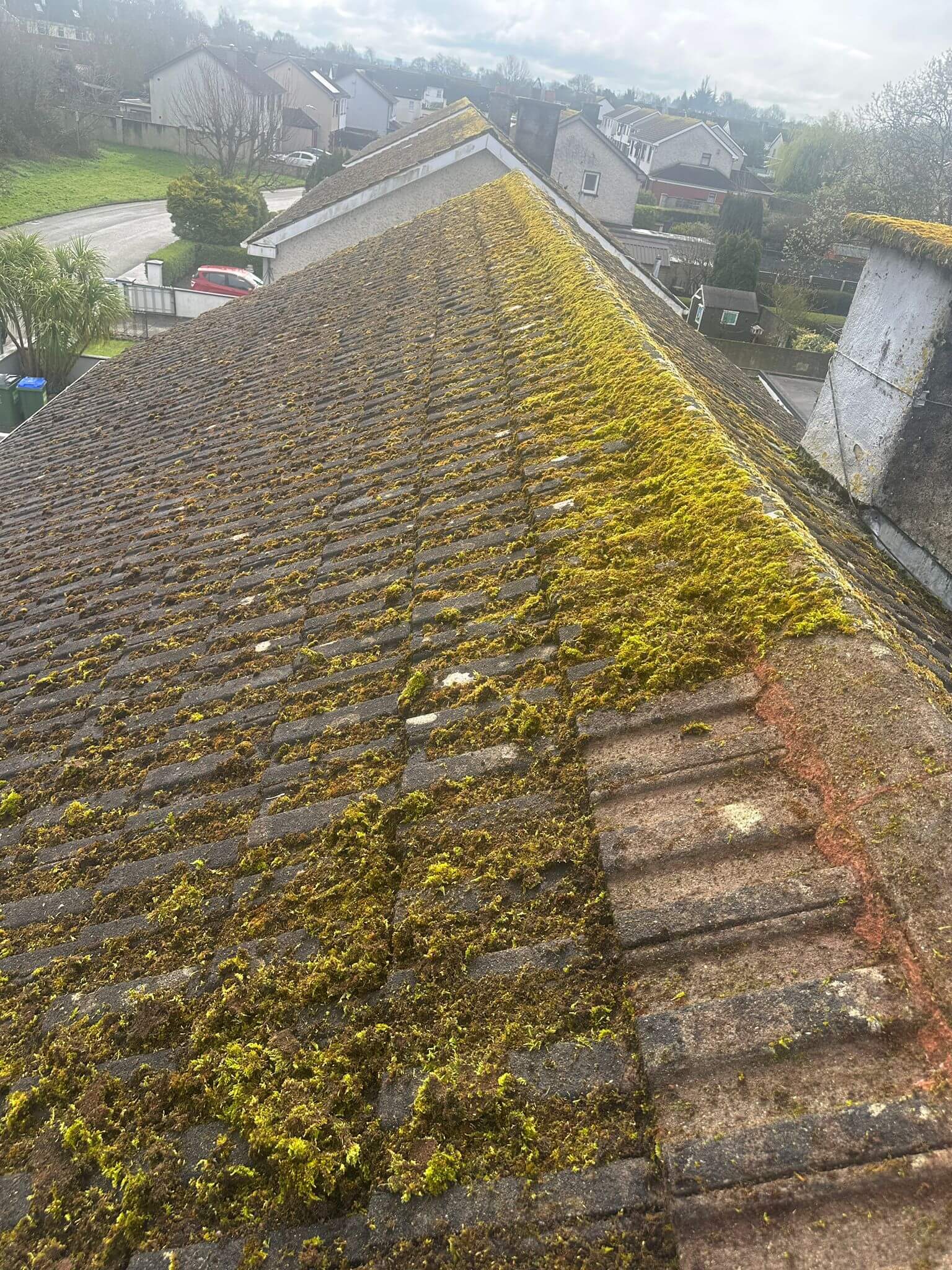
Stage 2 — Manual Moss Scraping & Removal In line with best practice, moss must be removed manually before treating with a biocide. We manually scrape and remove moss growth from the roof surface using specialist tools before any chemical treatment is applied. This step is critical for two reasons — it removes the bulk of the organic material from the roof surface before treatment, improving the penetration and effectiveness of the subsequent biocide application, and it prevents large volumes of moss debris from being washed into the guttering system during treatment.
All moss debris removed during the scraping stage is collected and disposed of responsibly. We do not simply push it into your gutters.
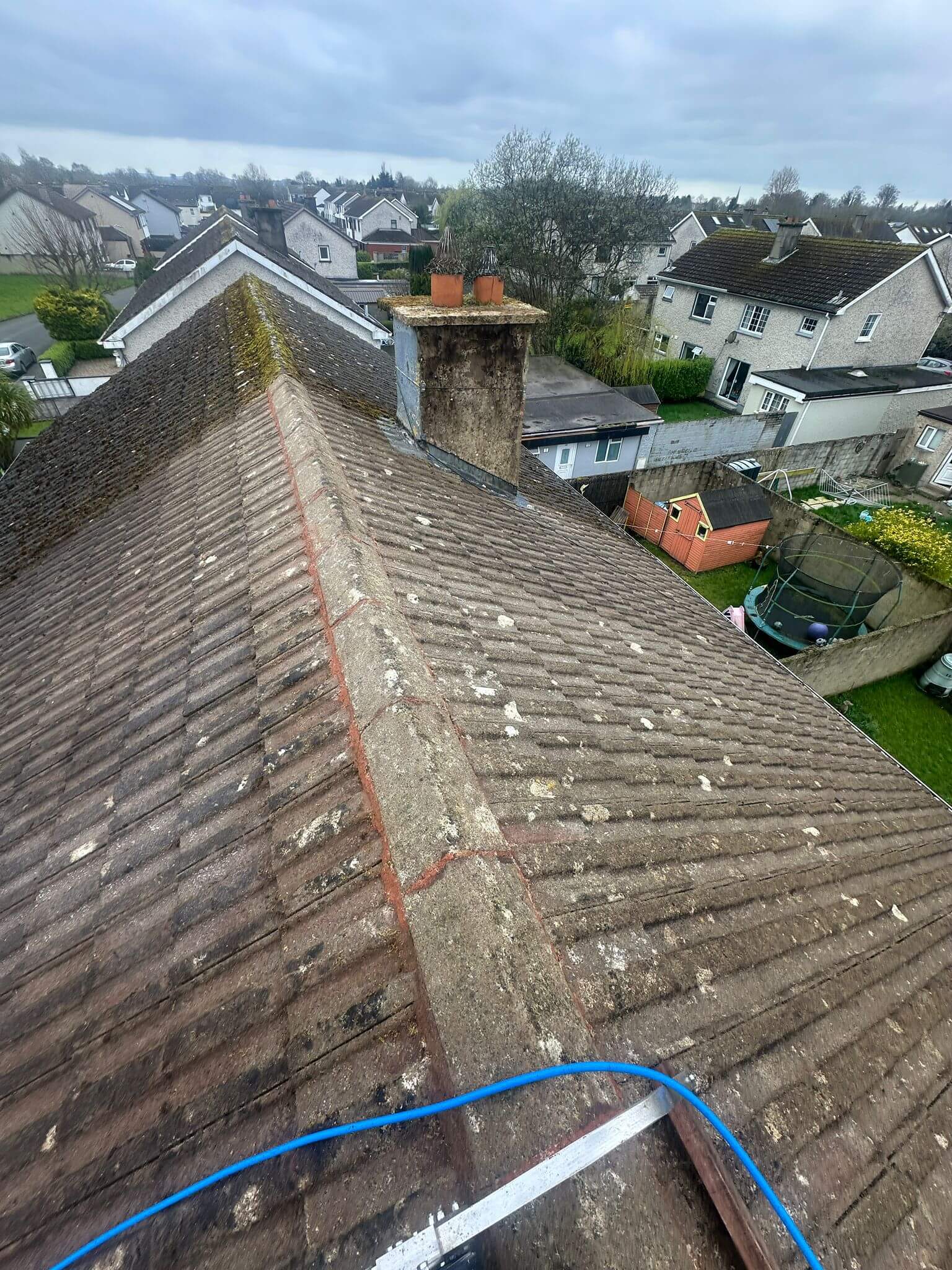
Stage 3 — Low Pressure Softwash & Biocide Treatment Following scraping, we apply a professional-grade biocide to the entire roof surface using a low-pressure system — no more forceful than a garden hose. The biocide penetrates the tiles and slates, killing all remaining moss, algae, lichen and spores at the root. The roof will not look instantly clean — the dead organic matter breaks down gradually over the following weeks and months and is washed away naturally by rainfall. This is the correct, professional result of a softwash treatment — and it is how you know the job has been done properly.
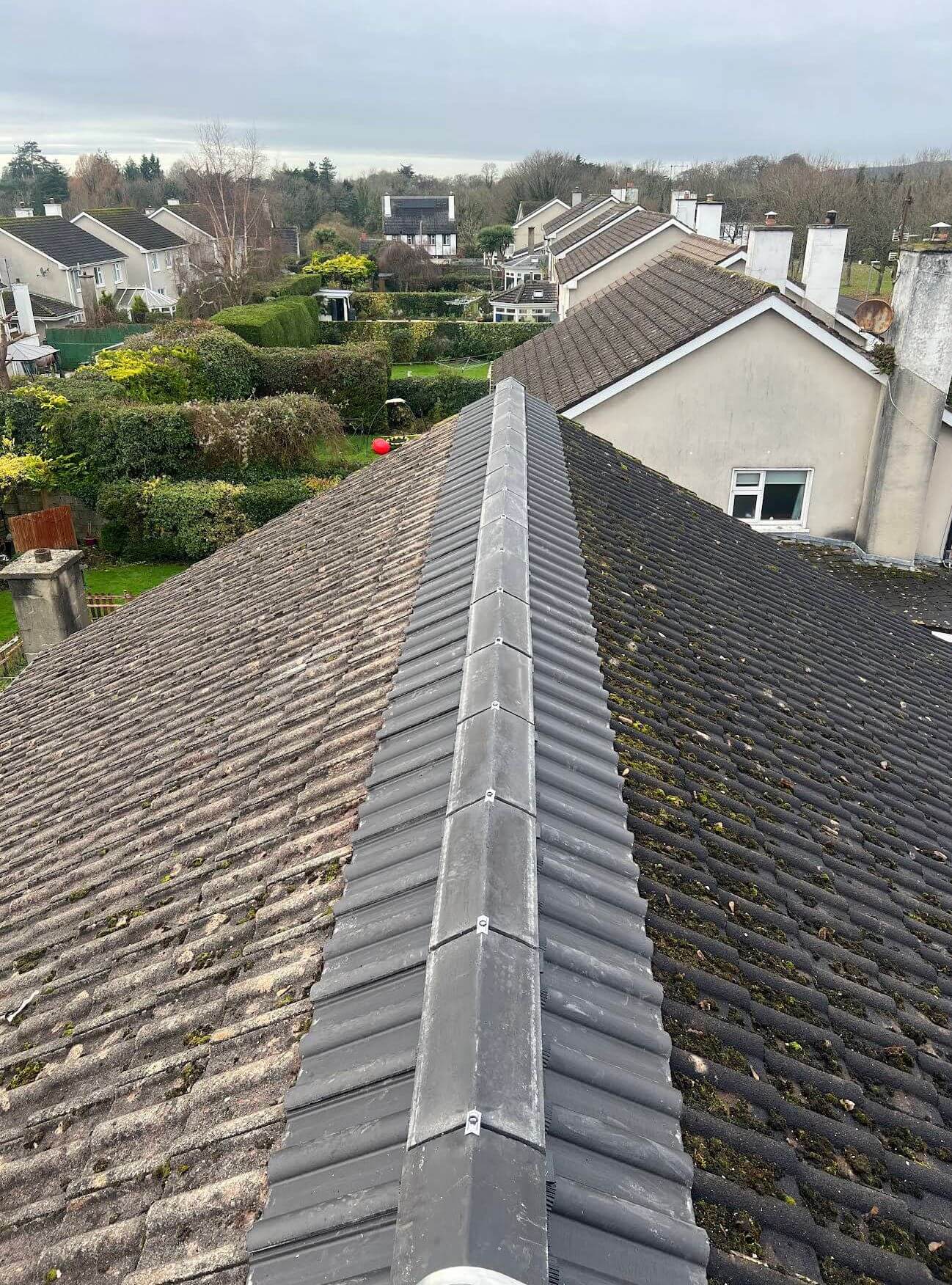
If you have noticed green, black or orange growth spreading across your roof tiles, you are far from alone. Moss and algae growth is one of the most widespread roofing issues affecting homes across Limerick, Clare and Tipperary — and the reason is straightforward: Limerick's Atlantic climate creates the ideal conditions for organic growth to thrive on roof surfaces.
Moss, algae and lichen require three things to establish and spread: moisture, shade and a surface to colonise. Limerick's persistent rainfall and overcast skies provide the first two in abundance. Roof tiles and slates — particularly those with a porous or textured surface — provide the third. Once established, organic growth spreads rapidly across the roof surface, particularly on north and west-facing slopes that receive less direct sunlight and retain moisture for longer after rainfall.
The result is that the majority of roofs on properties more than ten to fifteen years old across Limerick will show some degree of moss, algae or lichen colonisation — and many will show significant growth that is actively damaging the roof covering and accelerating deterioration of the materials beneath.
From our base in Limerick, we carry out professional roof cleaning across a wide area of the Midwest. We regularly work throughout Limerick city — including Castletroy, Dooradoyle, Raheen, Caherdavin, Corbally, Annacotty, Moyross and Ballinacurra — as well as all areas of County Limerick including Adare, Newcastle West, Rathkeale, Kilmallock, Abbeyfeale, Caherconlish, Croom and Patrickswell.
Yes. Our low-pressure softwash method is safe for natural slate, concrete tiles, fibre cement slate, clay tiles and flat roof membranes. Unlike high-pressure washing — which can crack aged slates, dislodge surface granules from concrete tiles and force water under ridge capping — our softwash system applies cleaning solution at low pressure that causes no damage to the roof surface or the underlying structure.
A professional softwash biocide treatment typically keeps organic growth at bay for two to four years, depending on the roof type, its orientation and the level of shade and moisture exposure the roof receives. North and west-facing roof slopes in shaded positions will see regrowth sooner than south-facing slopes in open positions. We advise most Limerick homeowners to arrange a professional roof clean every three to five years as part of a routine property maintenance programme.
This is the expected result of a professional softwash biocide treatment and is a sign the job has been done correctly. The biocide kills organic growth at its root structure, and the dead matter breaks down and washes away naturally over the following weeks and months. A roof that looks instantly clean after treatment has typically been pressure washed — which removes visible growth but leaves the root structure intact to regrow rapidly.
Yes. We take care to protect plants, garden features and paved areas around your property during the cleaning process. Our biocide products are applied at low pressure and targeted specifically at the roof surface. We advise on any specific precautions relevant to your particular property during the free inspection.
Yes. Following roof cleaning, moss debris and organic material will inevitably make its way into your gutters during and after the treatment process. We recommend a gutter clearance following roof cleaning to ensure the guttering system is clear and flowing freely — and we can carry this out as part of the same visit.
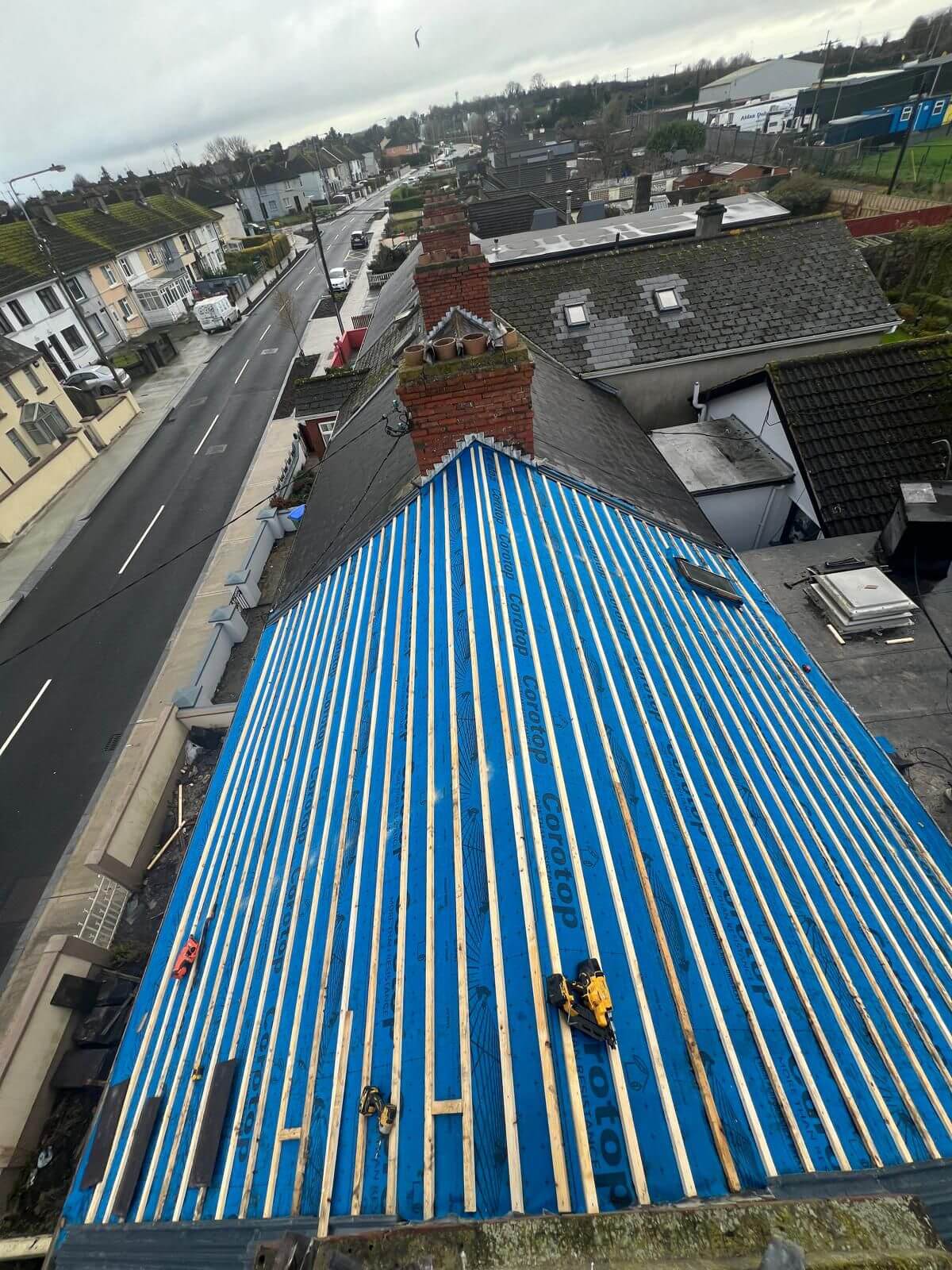
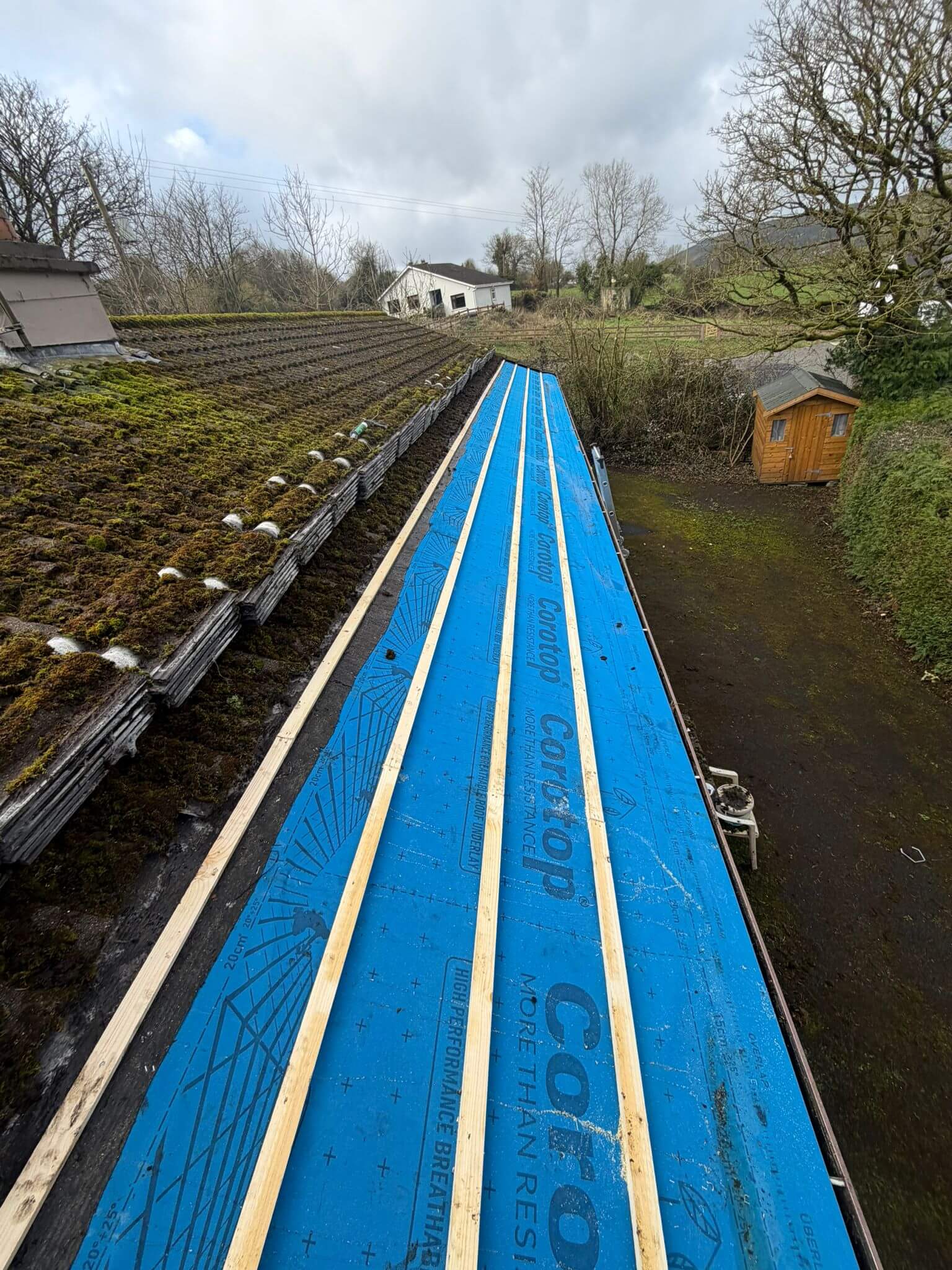
One of the most common questions homeowners ask after a professional softwash roof cleaning treatment is why the roof does not look completely clean immediately. The answer lies in understanding how the biocide treatment works.
Unlike high-pressure washing — which blasts visible growth from the surface immediately but leaves the root structure intact to regrow — a softwash biocide treatment kills organic growth at its source. The visible moss, algae and lichen on your roof is the above-surface expression of a biological organism that has root structures penetrating into the surface of your tiles or slates. The biocide kills the entire organism — roots and all — from the inside out.
Following treatment, the dead organic matter gradually breaks down and is washed away by rainfall over the following weeks and months. Because the growth is killed at its source, results typically last two to four years, sometimes longer depending on the surface and environment. This is significantly longer-lasting than high-pressure washing, which typically sees regrowth return within months because the root structure was never killed.
By the time the treatment has fully worked through — typically within three to six months — your roof will be visibly cleaner, the organic growth will be gone, and the biocide residue will continue to inhibit regrowth for an extended period thereafter.
We offer a comprehensive range of roofing services in Limerick and the surrounding counties. Whatever your roofing needs, Doherty Roofing has you covered.

Doherty Roofing is a fully insured, family-run roofing company based in Limerick. Led by Jim Doherty, we provide expert roof repairs, new roof installations, flat roofs, guttering and more across Limerick, Clare and Tipperary. Call us today for a free, no-obligation quote.

CRO Business Registration Number: 782030
Copyright © 2026 Doherty Roofing. All Rights Reserved.
Website by TME Digital




